
UPorto joins RePowerSiC to explore perovskites for laser power conversion
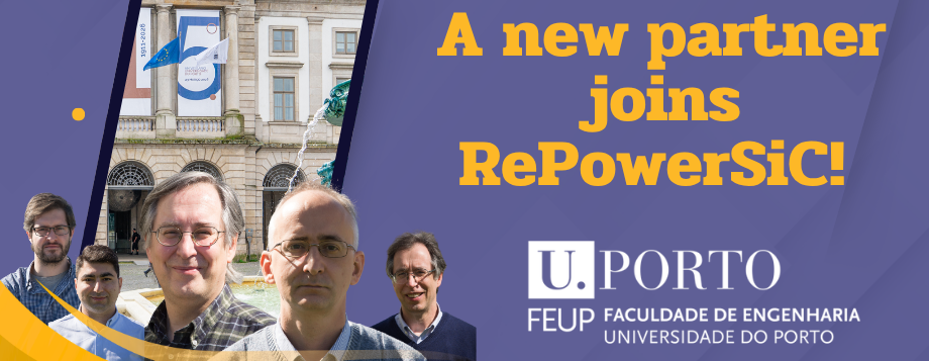
The University of Porto (UPorto) has joined the RePowerSiC consortium through the Horizon Europe Hop On mechanism, following an invitation from Professor Antonio García Loureiro of the University of Santiago de Compostela. The university brings years of experience in perovskite photovoltaics and glass encapsulation to a new area of research: converting laser light into electricity for space applications.
The research facilities are based at the Faculty of Engineering of the University of Porto (FEUP), within the Laboratory for Process Engineering, Environment, Biotechnology and Energy (LEPABE). Professor Adélio Mendes, among other research directions, leads the group on photovoltaic materials and devices, with particular attention to efficiency, stability and practical manufacturing. Through projects including GOTSolar, BI-DSC and DIAMOND, UPorto team has developed experience in perovskite solar cells, device characterization and laser-assisted hermetic glass encapsulation. RePowerSiC allows us to build on this work while tackling a different set of operating conditions.
Within the project, UPorto leads WP8, which introduces wide-bandgap perovskites as a complementary approach to the consortium’s silicon carbide laser power converters. Our activities cover the full journey from selecting and preparing absorber materials to fabricating devices, encapsulating them and evaluating their performance with our partners.
One of the attractions of perovskites is that their optical properties can be adjusted by changing their composition. This is particularly useful for laser power conversion, where the device receives light at a defined wavelength. We are investigating compositions suited to violet and green light in the 400–550 nm range, aiming to match the absorber to the laser wavelength and limit energy losses. Alongside efficiency, we are paying close attention to thermal stability and changes in the material under continuous illumination. Inorganic perovskites and robust charge-transport layers are therefore central to our work.
Protecting these devices is equally important. Our team has developed laser-assisted glass-frit sealing methods that create hermetic enclosures while limiting the heat reaching the sensitive photovoltaic layers. In RePowerSiC, we are adapting this approach to thin borosilicate glass. The aim is to reduce the weight of the device in space by more than half compared with conventional thicker glass solutions, while maintaining reliable sealing and resistance to thermal stress.
Working with the consortium connects our laboratory experiments with modelling and testing capabilities needed to assess devices for space applications. It also gives us the opportunity to compare perovskite and SiC converters and understand where each technology offers advantages.
During the remaining project period, we aim to produce and test fully encapsulated perovskite converter prototypes, working towards the project’s ambitious target of over 70% conversion efficiency under monochromatic illumination. We also want to understand how these devices age under laser exposure and laboratory-simulated space conditions. For us, success will mean both demonstrating promising performance and establishing what is needed to make that performance last. We hope this collaboration will lay the groundwork for further joint research on lightweight photovoltaic devices and power delivery in space.
Article contributed by the UPorto team.
Stay Updated