
Inside DTU’s laboratories: advancing SiC laser power converters
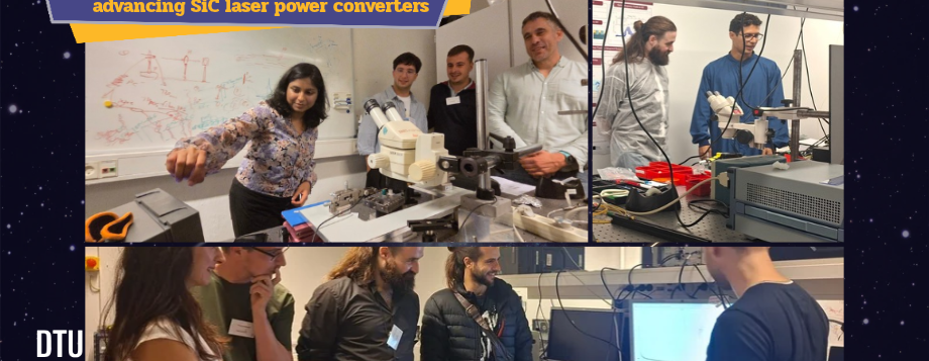
As part of the rePowerSiC project, DTU is actively engaged in fabrication of SiC based Laser Power Converters (LPCs), using its advanced cleanroom infrastructure and sophisticated fabrication technologies. During the 2nd year rePowerSiC project meeting hosted at DTU, significant progress and ongoing activities related to device fabrication were presented to the consortium partners, accompanied by technical discussions and demonstrations of the available experimental and technological capabilities.
From fabrication to device characterisation
The seminar conducted at DTU highlighted various crucial stages of semiconductor device fabrication, including lithography, dry etching, thin-film deposition, antireflection coating (ARC) deposition, and metallization processes. We also introduced the various micro and nanofabrication facilities available at DTU, including maskless lithography systems, dry etching equipment such as the reactive ion etching system (RIE, Pegasus), metal evaporators, and thin-film deposition techniques such as plasma-enhanced chemical vapor deposition (PECVD), atomic layer deposition (ALD) as well as multiple tools for annealing, i.e. heat-treatment, to ensure a passivation effect in the surface coatings and conductivity from the devices into the metal contacts.. We have also provided a guided tour of DTU cleanroom facilities to our consortium partners from outside area around the cleanroom.
In addition to showcasing the cleanroom fabrication infrastructure, DTU organized a dedicated laboratory visit to demonstrate its advanced optical and electrical characterization capabilities. During this visit, project partners were introduced to several experimental setups and measurement techniques routinely used for device characterization and performance analysis. These included time-resolved photoluminescence (TRPL) spectroscopy for investigating carrier recombination dynamics and excited-state lifetimes of various samples in different stages of processing. The method consists of sample illumination with a laser, similar to the real HPLT use case, followed by time-resolved collection of remitted light to gauge the rapidity of the sample’s losses. This allows us to probe the quality of the base material, verify the efficacy of the passivation we perform on the materials prior to the addition of metal contacts, and to perform quality control on finalized samples. The lab experiments also included electrical device characterization using precision probe stations and Keithley source-measure units (SMUs) for I-V measurements and other electrical characterization, allowing us to estimate the power conversion efficiency and response time of finalized devices. These demonstrations provided the consortium with a broader perspective on DTU's integrated capabilities, spanning device fabrication, experimental characterization, and performance assessment.
Connecting with SiCPIC
An additional highlight of the laboratory visit was the introduction of our other ongoing EU project, SiCPIC, which focuses on SiC based photonic integrated circuits. This interaction provided a great opportunity to strengthen cross-project collaboration and knowledge exchange between rePowerSiC and SiCPIC. In particular, DTU presented its ongoing research on SiC based single soliton generation out of a microring resonator, and advanced generation approach using machine learning capabilities.
Overall, this meeting was a great opportunity to share our ongoing work, show the fabrication and characterization facilities at DTU. This meeting was also a good opportunity to explore how we could benefit from each consortium partner’s research facilities, share ideas, and discuss possible collaborations in future.
Stay Updated